
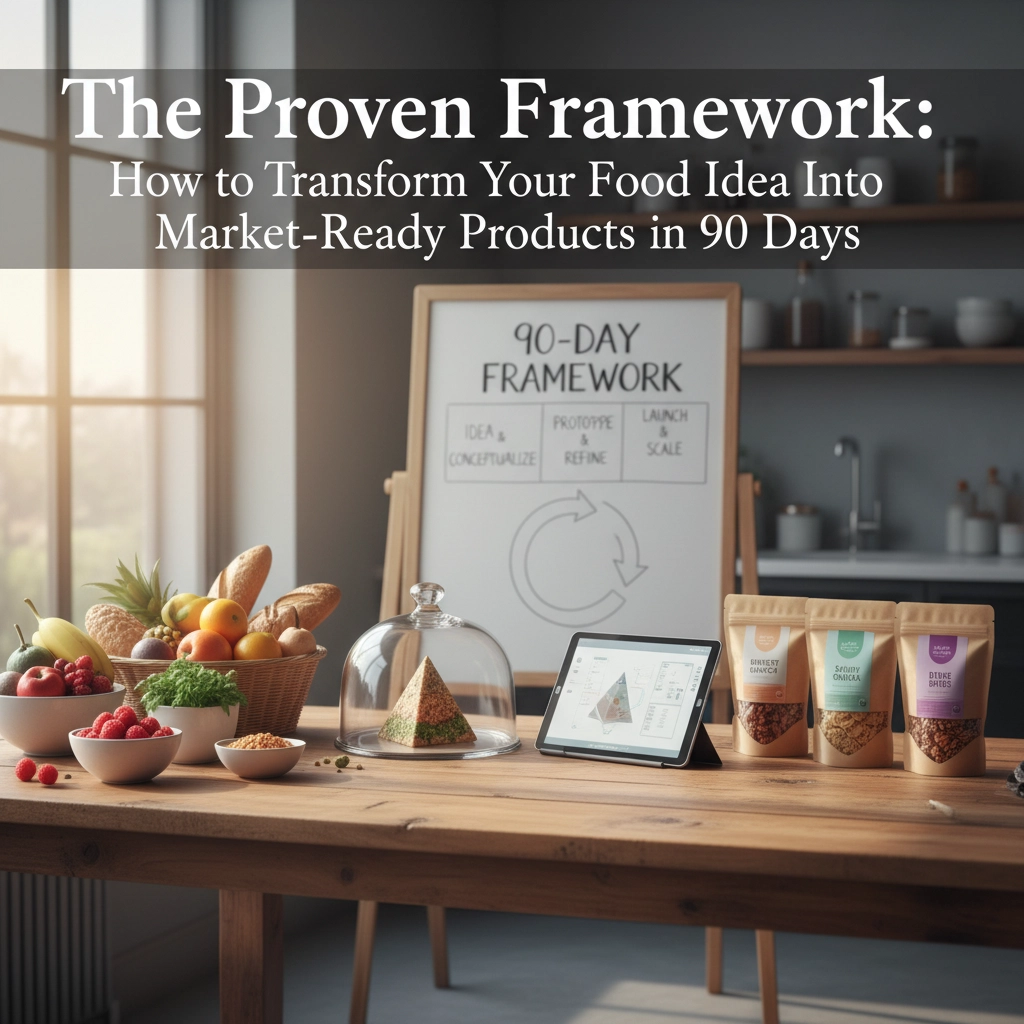
Most food entrepreneurs believe product development takes years. They're wrong.
The traditional food industry operates on outdated timelines: six months to five years for product development. But here's what industry insiders know: the right framework, combined with experienced operational guidance, can compress this timeline to just 120 days.
We've seen it happen dozens of times. Food entrepreneurs with brilliant ideas but zero operational experience transform their concepts into market-ready products in four months flat. The secret isn't just faster manufacturing: it's having a fractional COO approach that eliminates the costly trial-and-error cycle that derails most food startups.
The Reality Check: Why Most Food Ideas Never Make It to Market
Before diving into the framework, let's address the elephant in the room. Ninety-five percent of food products fail not because of bad ideas, but because of poor execution. Founders get stuck in endless loops of:
- Recipe tweaking without market validation
- Regulatory confusion that halts progress for months
- Supply chain disasters that double costs overnight
- Manufacturing partnerships that promise everything and deliver nothing
The difference between success and failure? Having an experienced operator as your strategic partner from day one.

The 120-Day Framework: Three Phases That Actually Work
Phase 1: Foundation & Validation (Days 1-40)
Weeks 1-3: Market Reality Check
This isn't about conducting endless focus groups. We're talking about rapid market validation using proven methodologies:
- Target customer interviews (minimum 25 conversations)
- Competitive analysis with pricing benchmarks
- Distribution channel mapping
- Regulatory requirement audit
Weeks 4-6: Concept Refinement & Business Model
Here's where the fractional COO approach becomes critical. Most founders waste months perfecting recipes before understanding their business model. An experienced operator guides you through:
- Product positioning and unique value proposition
- Pricing strategy based on real market data
- Initial formulation parameters
- Supply chain feasibility assessment
The key insight? You're not just developing a product: you're building a scalable business system.
Phase 2: Development & Testing (Days 41-80)
Weeks 7-9: Rapid Prototyping
Traditional food incubators take months for this phase. Our accelerated approach leverages:
- Small-batch production capabilities for immediate testing
- Ingredient sourcing through established supplier networks
- Nutritional analysis and compliance verification
- Iterative formulation based on customer feedback
Weeks 10-12: Manufacturing Partnership & Scaling
This is where having operational expertise becomes invaluable. The wrong manufacturing partner can kill your timeline and budget. An experienced fractional COO helps you:
- Select manufacturers based on capability, not just cost
- Negotiate production agreements that protect your interests
- Establish quality control processes from the start
- Plan for scale before you need it

Phase 3: Launch Preparation (Days 81-120)
Weeks 13-15: Regulatory & Compliance
Food safety regulations aren't suggestions: they're business-critical requirements. This phase includes:
- FDA labeling compliance and nutrition fact panels
- Scheduled process development for shelf-stable products
- Facility registration and process authority coordination
- Product liability insurance and documentation
Weeks 16-17: Market Entry Strategy
The final sprint focuses on go-to-market execution:
- Packaging finalization and initial production runs
- Distribution channel activation
- Marketing launch coordination
- Customer service and feedback systems implementation
The Fractional COO Advantage: Why Experience Matters
Here's the uncomfortable truth: most food entrepreneurs are brilliant at product creation but terrible at operations. They have amazing ideas but lack the operational muscle to execute at scale.
Traditional food incubators provide manufacturing services. We provide something more valuable: operational partnership that feels like having a seasoned COO on your team.
Strategic Decision-Making Support
Every week brings critical decisions that can make or break your timeline:
- Which supplier offers the best long-term partnership potential?
- How do you negotiate minimum order quantities as a startup?
- When should you invest in custom packaging versus stock options?
- Which regulatory hurdles need immediate attention versus later optimization?
Risk Mitigation Through Experience
An experienced fractional COO has seen every possible failure mode:
- Supply chain disruptions that require backup planning
- Quality issues that demand immediate corrective action
- Regulatory changes that affect product formulation
- Market shifts that require pivot strategies

Real-World Application: Making the Framework Work
The 120-day timeline isn't theoretical: it's based on real results. But success requires three critical elements:
Element 1: Committed Leadership
Founders must be available for rapid decision-making. This isn't a part-time project: it's a sprint that demands full attention and quick pivots based on market feedback.
Element 2: Adequate Capitalization
Accelerated timelines require upfront investment in:
- Professional food science consultation
- Small-batch production for testing
- Regulatory compliance and certification
- Initial inventory for market testing
Element 3: Experienced Operational Guidance
This is where the fractional COO model becomes essential. Having access to someone who's navigated these challenges before eliminates months of expensive learning curves.
The Manufacturing Partnership That Changes Everything
Most food entrepreneurs approach manufacturing as a transactional relationship. Big mistake. Successful 120-day launches require manufacturing partners who function as extensions of your team.
What This Looks Like in Practice:
- Weekly check-ins during active development phases
- Real-time problem-solving when challenges arise
- Proactive recommendations based on industry experience
- Honest feedback about timeline and feasibility concerns
This partnership approach transforms manufacturing from a bottleneck into an accelerator.
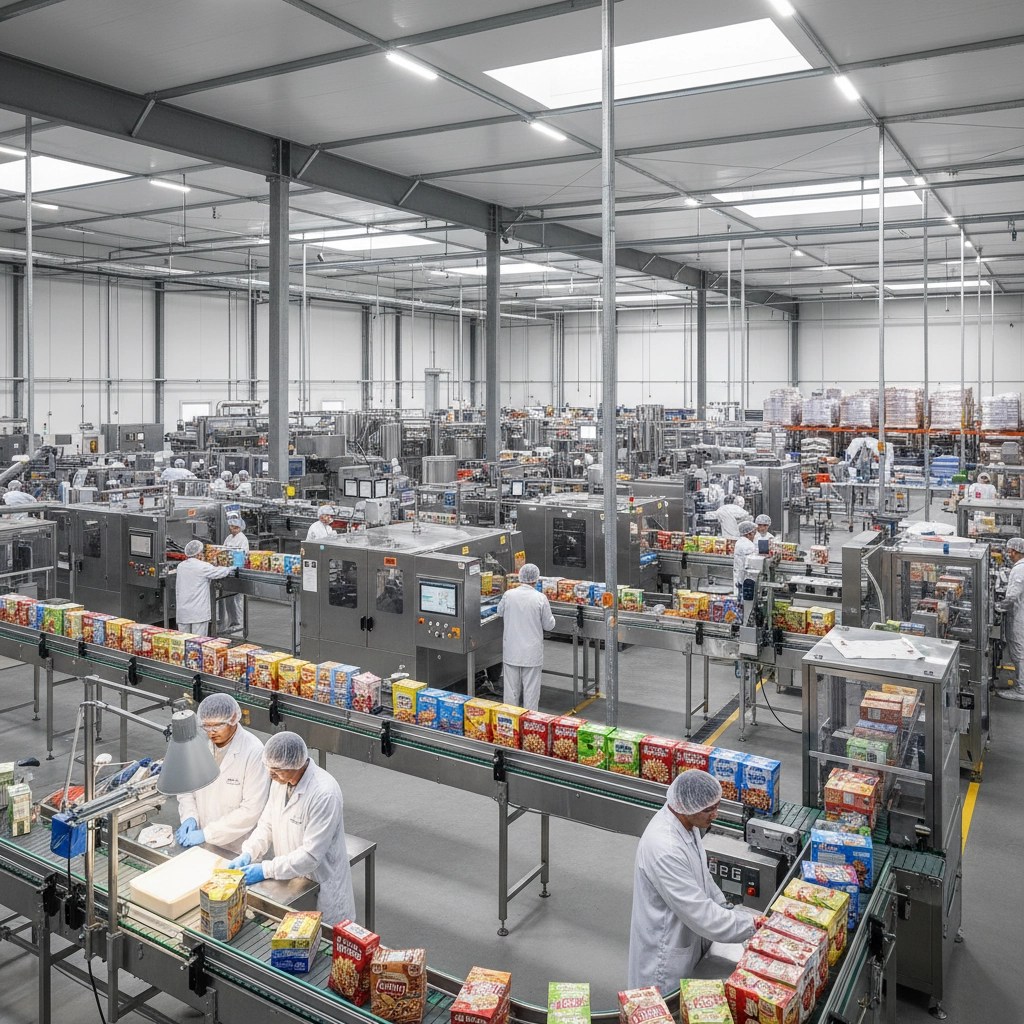
Beyond Manufacturing: The Complete Support System
The 120-day framework succeeds because it addresses every aspect of product development simultaneously:
Technical Excellence
- Food science expertise for optimal formulation
- Process development for consistent quality
- Packaging selection for shelf life and appeal
- Quality control systems for scale
Business Strategy
- Market positioning and competitive analysis
- Pricing optimization and margin protection
- Distribution strategy and channel development
- Financial modeling for sustainable growth
Operational Efficiency
- Supply chain optimization and risk management
- Production planning and inventory forecasting
- Regulatory compliance and documentation
- Continuous improvement processes
The Compound Effect: Why Speed Matters
Time-to-market isn't just about beating competitors: it's about learning faster than everyone else. Every day your product sits in development is a day you're not gathering real market feedback.
The 120-day framework creates a compound learning advantage:
- Faster customer feedback loops
- Quicker iteration cycles
- Earlier revenue generation
- Reduced cash burn during development
Market dynamics change rapidly. The food trend that looks promising today might be saturated in six months. Speed to market captures opportunity windows that slower competitors miss entirely.
Your Next Steps: From Idea to Implementation
The 120-day framework works, but only with the right operational support system. Here's how to get started:
Week 1 Action Items:
- Document your product concept and target market
- Identify your biggest operational knowledge gaps
- Research potential manufacturing partners
- Begin customer validation conversations
Critical Success Factor: Don't attempt this alone. The founders who succeed in 120 days have experienced operational guidance from day one.
Ready to transform your food idea into a market-ready product? The framework exists. The manufacturing capabilities are proven. The only question is whether you're ready to move at the speed of opportunity.
Learn more about our product development services and discover how fractional COO support can accelerate your timeline from years to months.
The 120-day opportunity window is open. Your move.